

OPERA
Original Operas. Chamber Opera. Myth. Memory. Voice.
Opera focuses on original dramatic works for the stage, including The Door Cycle, Lightfall, and selected professional collaborations. The work brings together music, language, ritual, myth, memory, and theatrical architecture, with a focus on voice, transformation, and spiritual depth.
The Door Cycle
A chamber opera trilogy tracing one divided soul through fracture, memory, reflection, and spiritual integration.
Opera I: An Unfound Door
A chamber opera of exile, love, and spiritual fracture, where longing becomes the threshold to transformation.
Opera II: The Soldier’s Return
A liminal opera of memory, death, and return, as a fallen soldier is guided home by the beloved he cannot fully leave.
Opera III: The Mirror
A developing chamber opera centered on grief, awareness, and the recognition of the self through reflection, shadow, and spiritual reckoning.
The Door Cycle is conceived as a large-scale metaphysical journey in chamber opera form. Each work stands independently while contributing to a larger dramatic architecture, tracing the movement of a divided soul through longing, separation, reckoning, and recognition.
Inspired in part by the language and mythic longing of Thomas Wolfe’s A Stone, a Leaf, a Door and Look Homeward, Angel, The Door Cycle unfolds as a theatrical world of thresholds, shadows, suspended spaces, and impossible rooms.
The Door Cycle
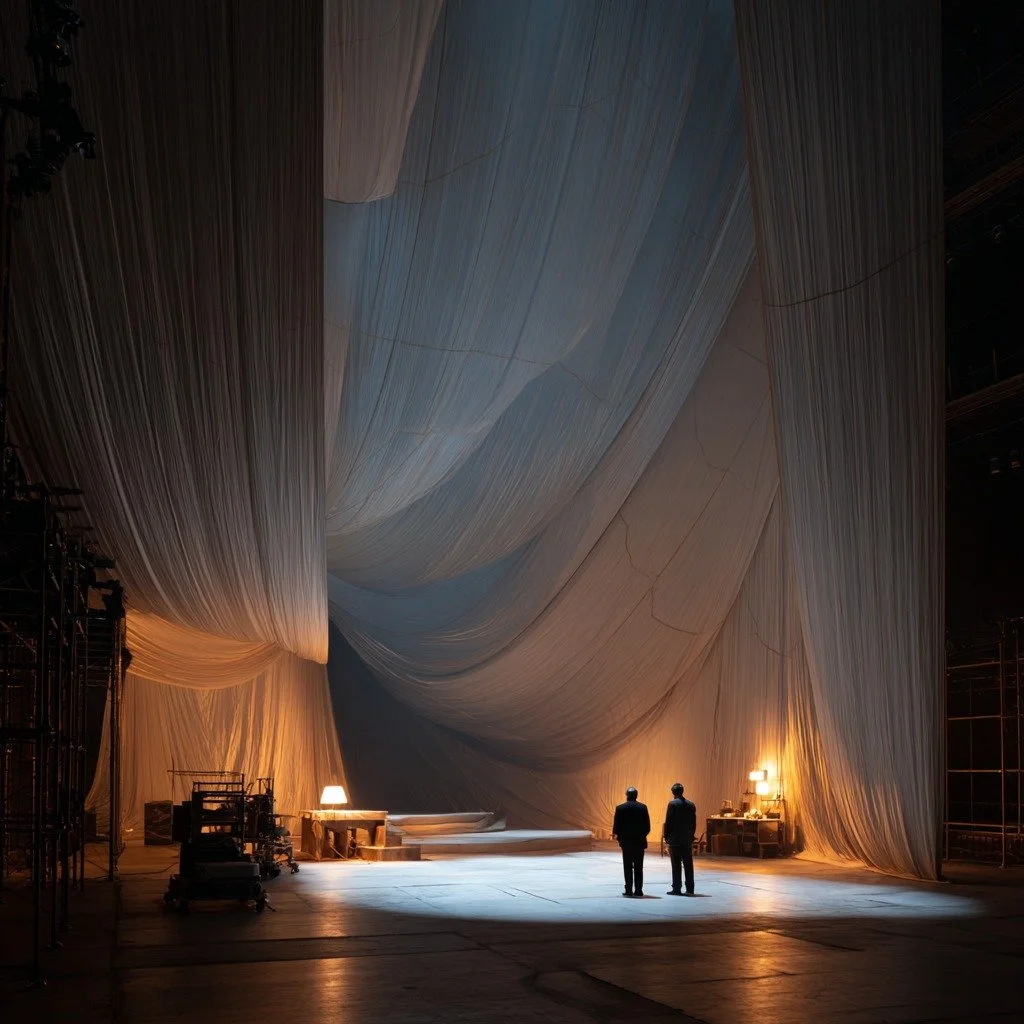
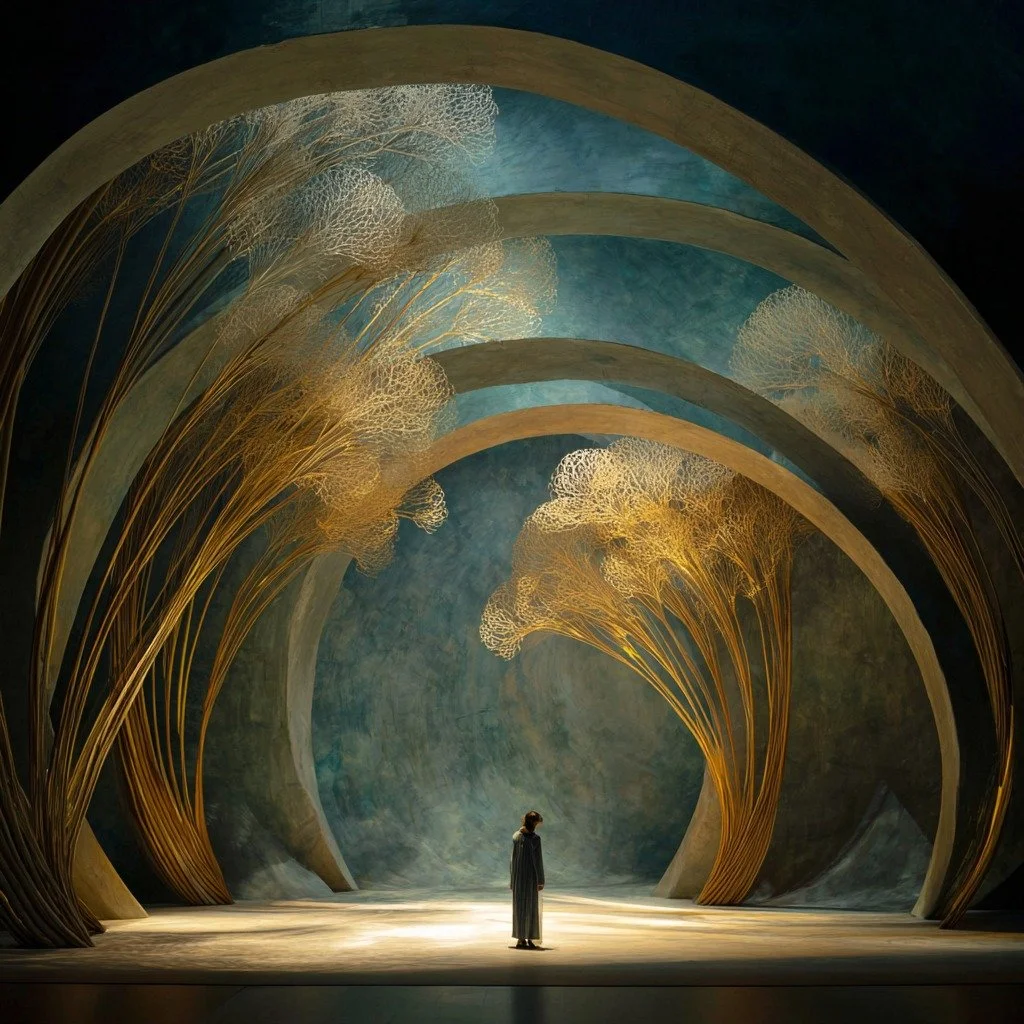
Visually, The Door Cycle lives in the tension between intimacy and vastness: a single figure before an immense door, a room that becomes a memory, a stage space that opens like a wound or closes like a dream. The design language should feel elemental rather than literal, shaped by stone, leaf, light, fabric, breath, and silence.
Across the trilogy, recurring images return in altered form: doors, mirrors, chambers, veils, pathways, and bodies caught between departure and arrival. The staging should allow each opera to inhabit its own atmosphere while revealing that all three works belong to one larger metaphysical architecture.
Light becomes memory. Space becomes consciousness. The stage becomes a divided soul searching for the hidden door to wholeness.
Lightfall
Lightfall is an original opera project by John Gentry Tennyson centered on the Declaration of Independence, the interiority of Thomas Jefferson, and the unstable architecture of America’s founding ideals. Rather than presenting the birth of the nation as patriotic ceremony, the work enters Jefferson’s mind as a chamber of light, contradiction, and consequence, where reason, language, liberty, and moral failure collide.
The opera moves through the public force of the Declaration and the private shadows beneath it: the deleted anti-slavery clause, the reality of Sally Hemings, the presence of Abigail Adams, and the charged intellectual bond between Jefferson and John Adams. In this world, America is not only a nation being declared, but a structure being built in real time, its foundations already marked by fracture.
Lightfall
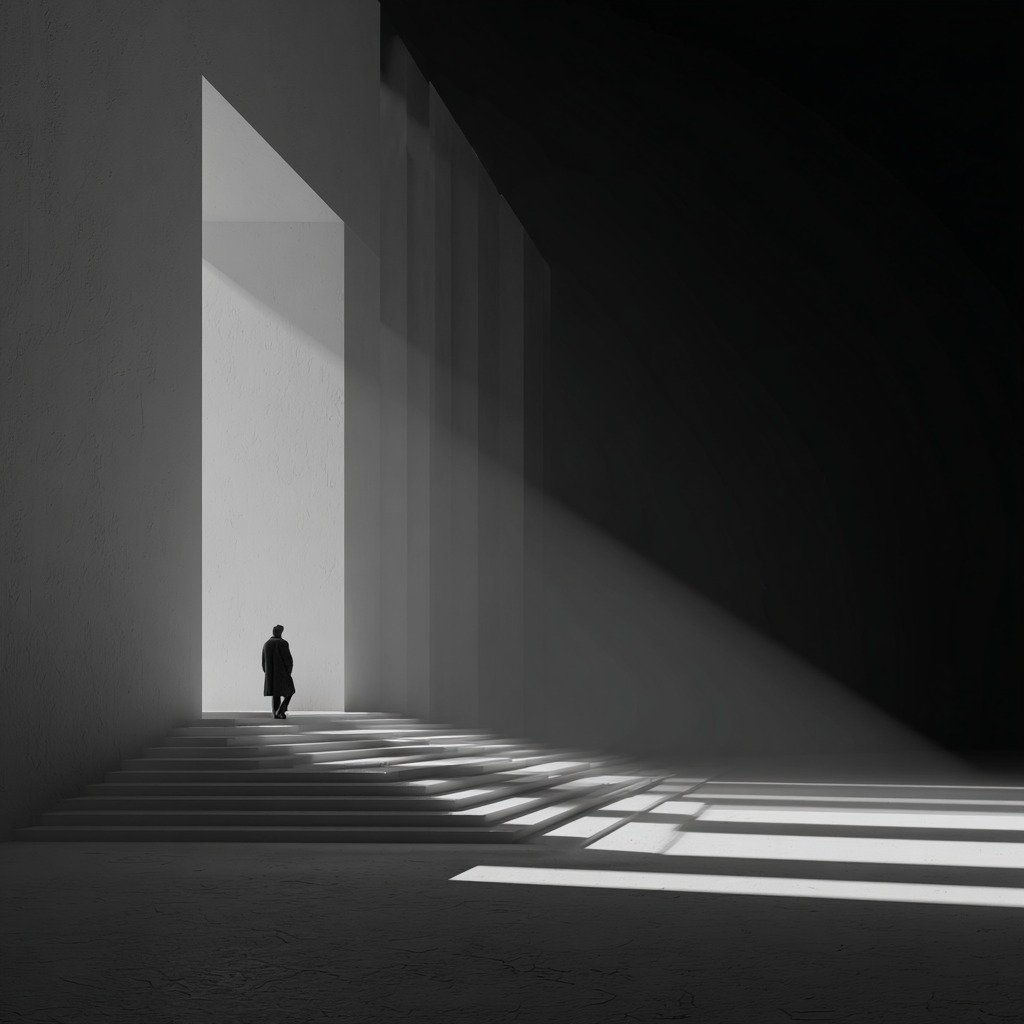
A chamber of light, paper, shadow, and fracture. A ceremonial space where white planes, suspended pages, narrow beams, and broken thresholds turn history into interior architecture.
As a stage world, Lightfall does not live in historical realism. It lives inside the pressured architecture of Jefferson’s mind, where rooms contract and expand, language becomes physical, and the Declaration appears not as a document, but as an unstable object under examination.
The staging should feel spare, modern, and exacting: pages suspended in air, clauses isolated by light, doorways opening into darkness, and bodies moving through a world where beauty, reason, liberty, moral failure, historical consequence, and private conscience occupy the same room.
The Tin Angel
Opera Libretto by Paul Pines
Music by Daniel Asia
Orchestration by John Gentry Tennyson
World Premiere at La MaMa Experimental Theatre · New York City
Conducted by Enrico Fagone
Produced by Teatro Grattacielo & Stefanos Koroneos
The Tin Angel is a contemporary American opera by Daniel Asia, with a libretto by Paul Pines based on his acclaimed 1982 novel of the same name. Set in the dangerous underground world of a downtown Bowery jazz club, the opera follows a charged cast of characters through love, revenge, memory, and redemption.
Rooted in the real-life atmosphere of The Tin Palace, the New York jazz club founded by Pines in 1973, the work brings together American opera, jazz-inflected color, immigrant experience, and detective-story suspense. Presented in its world premiere by Teatro Grattacielo, the production featured orchestration by John Gentry Tennyson, bringing theatrical color, dramatic weight, and ensemble clarity to Asia’s operatic score.
Trailer for The Tin Angel by Daniel Asia and Paul Pines, world premiere production by Teatro Grattacielo in 2025.
The Tin Angel
A Bowery jazz-club world of smoke, memory, crime, ghosts, and unfinished lives.
Inside the heat and danger of a downtown room, music is never merely background. The club becomes a pressure chamber for Pablo, Maria, Ponce, Black Hattie, Christ, and the community surrounding them: a place of performance, confession, seduction, revenge, and reckoning, where murder, inheritance, addiction, love, and unfinished lives converge.
Nocturnal, intimate, and volatile, the production turns tables, bar light, instruments, doorways, and the pulse of the band into part of the drama, making the Tin Angel itself a living witness. Jazz becomes more than setting: it becomes pressure, atmosphere, and emotional architecture, carrying the room from performance into confession, from danger into reckoning, and from sound into silence, and from loss toward release.